


remote wire




Originally posted by zzzzzzz:
what will happen have to long of a run with the
what will happen have to long of a run with the
All a remote wire does is sends a small amount of current to activate your amps, turns them on/off. So you don't have to worry about running to long of a remote wire.


if connecting morethan 2ampsto the remote wire, I would strongly advise on using a relay...
---taken from www.the12volt.com---
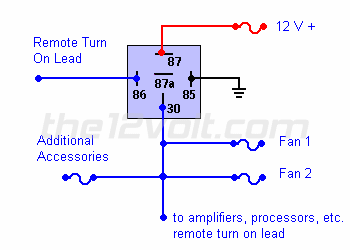
Using a 30 amp SPDT relay, connect terminal #87 to constant 12 volts positive with a fuse rated to the sum of the additional accessories you've added and the components you need to turn on. (If you have two fans rated at 5 amps each and a neon light rated at 10 amps, you would use a 20 amp fuse plus 200 ma for each amplifier and processor.) Connect terminal #85 to ground, terminal #86 to the remote turn on lead from the head unit, and terminal #30 to each accessory with an appropriate fuse. A fuse (not shown) could also be used between the output of the relay (#30) and the remote turn on lead of the amplifiers and/or processors for extra precaution.
regards, Mark
---taken from www.the12volt.com---
Using a 30 amp SPDT relay, connect terminal #87 to constant 12 volts positive with a fuse rated to the sum of the additional accessories you've added and the components you need to turn on. (If you have two fans rated at 5 amps each and a neon light rated at 10 amps, you would use a 20 amp fuse plus 200 ma for each amplifier and processor.) Connect terminal #85 to ground, terminal #86 to the remote turn on lead from the head unit, and terminal #30 to each accessory with an appropriate fuse. A fuse (not shown) could also be used between the output of the relay (#30) and the remote turn on lead of the amplifiers and/or processors for extra precaution.
regards, Mark

It's always a good idea to use a relay as some amps pull a large(relatively) amount of current if they fail through the remote circuit. This can fry the remote circuit in your deck. The relay will protect against this.


